
Subsequent Injuries Benefit Trust Fund
Reform Needed to Restore Original Purpose, Address Abuses and Rein in
Skyrocketing Costs
- The SIBTF is a state fund that pays injured workers for previous, work-disabling disabilities. It is funded by annual assessment on employers.
- Originally established for war veterans entering the workforce and rarely used for decades, SIBTF claims have exploded during the past 10 years.
- SIBTF claims are added to workers’ compensation claims, but are not subject to the same rules and safeguards.
- Annual claims to the SIBTF have increased five-fold. Average benefit amount has increased by six times from $13K to $80K per claim. Money paid to vendors and attorneys has grown by 40 times.
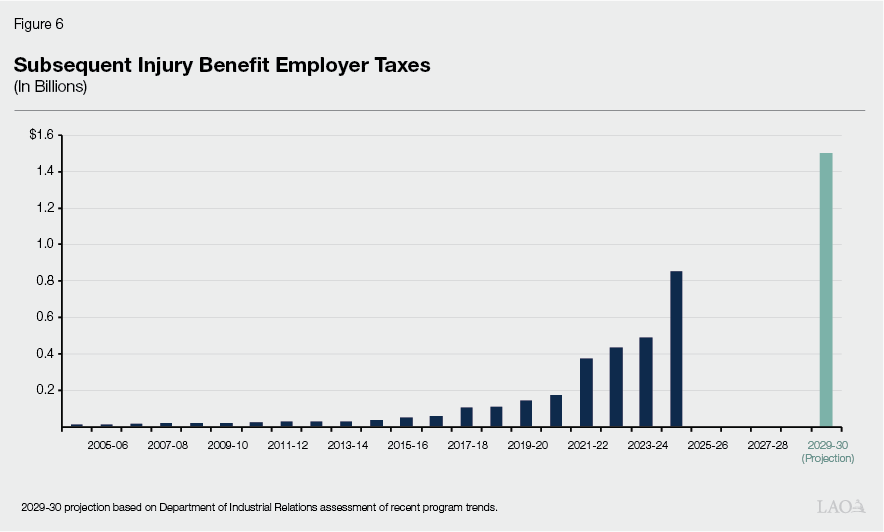
- Employer assessments have grown from $106 million to $859 million per year
- SIBTF claims are increasingly for common health conditions or chronic diseases frequently found in an aging population – like acid reflux and hypertension – even though they rarely result in disability in a typical workers’ compensation claim.
- SIBTF reforms are needed to address skyrocketing liabilities.
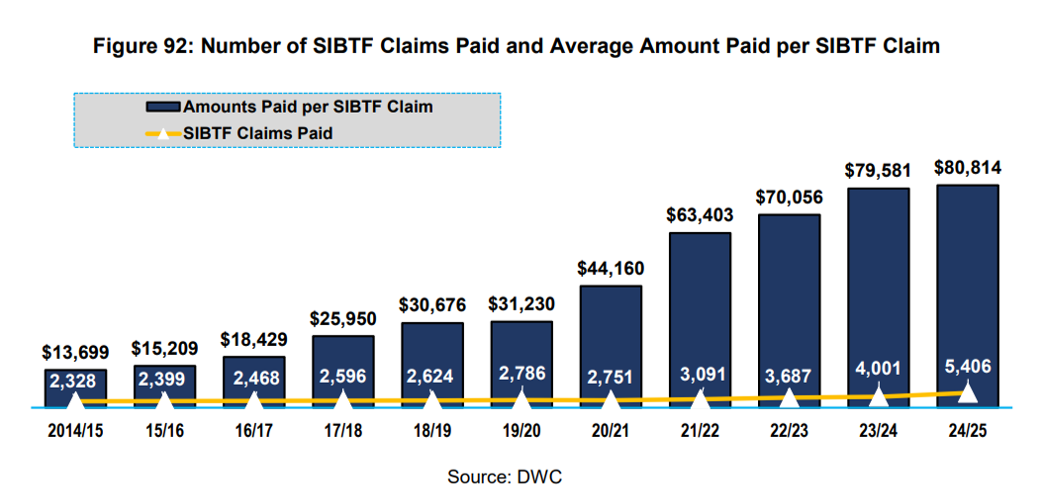
Skyrocketing SIBTF Tax on California Employers
The chart below shows how workers’ compensation assessments charged to by the State of California have increased due to huge increases in SIBTF costs:
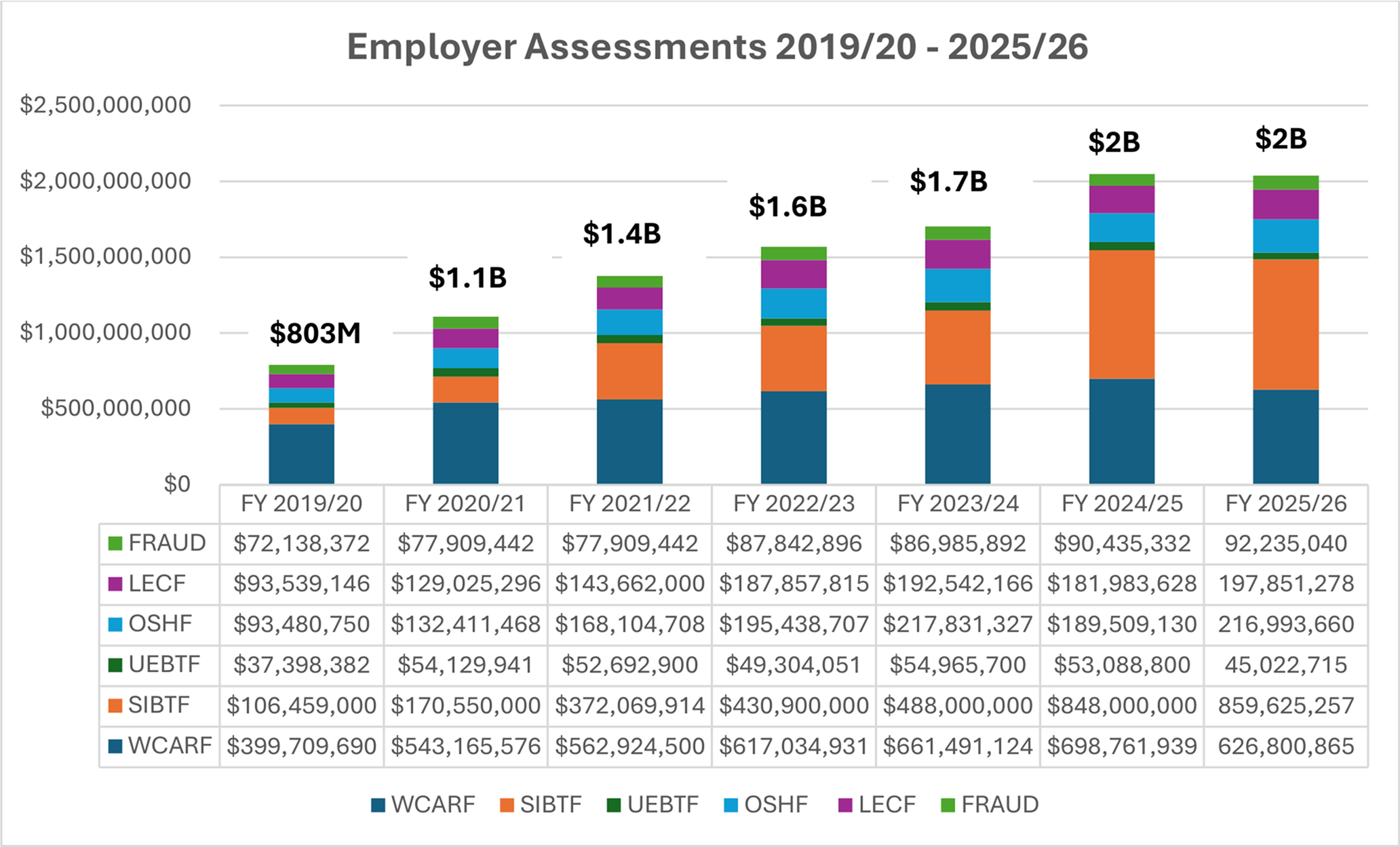
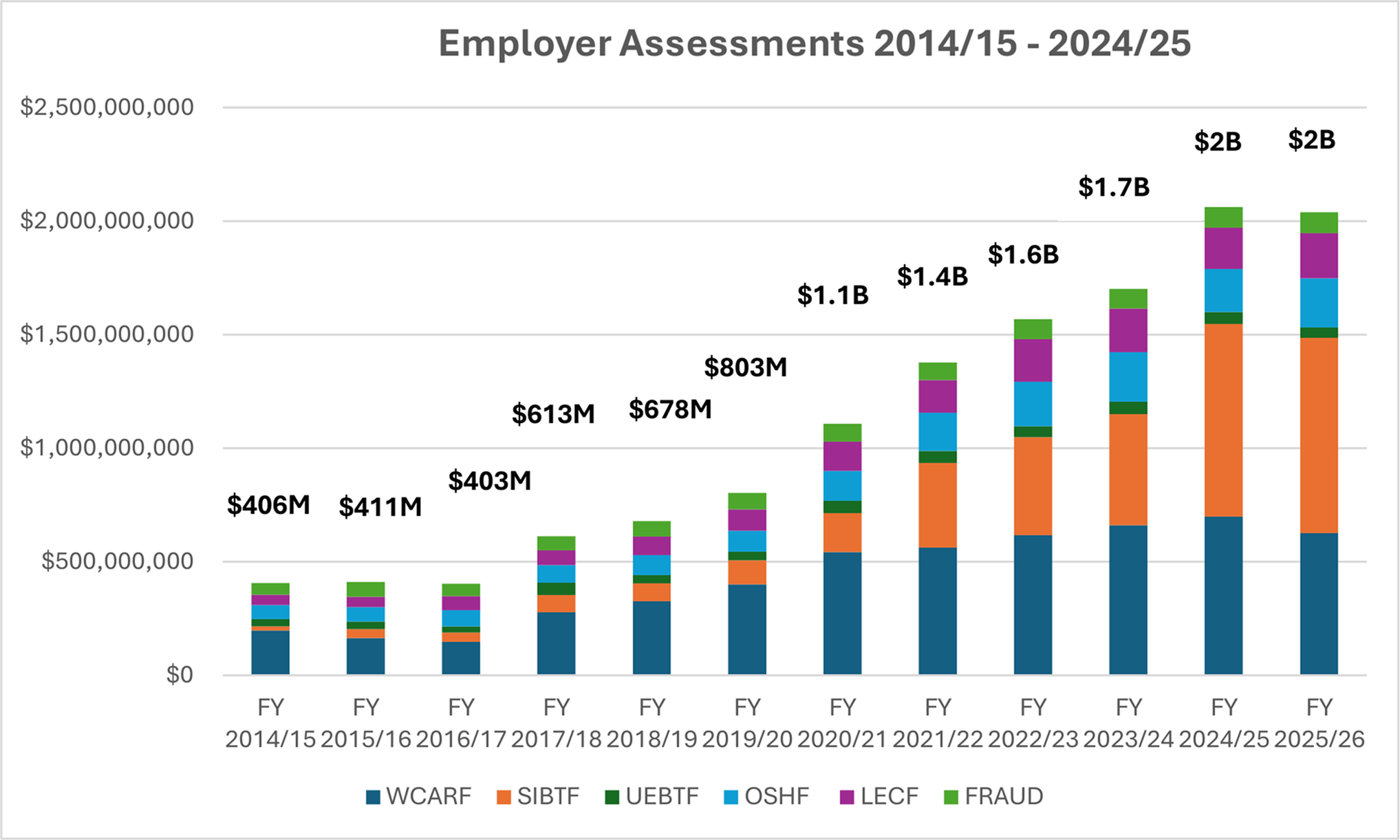
Source: Department of Industrial Relations Annual Assessment Methodology
Public Agencies Hammered by SIBTF Increases
The chart below shows the astonishing increases hitting some public agencies to fund the SIBTF.
| Agency | SIBTF Tax 2020 |
SIBTF Tax 2025 |
SIBTF Tax Growth $ |
SIBTF Tax Growth % |
|||
|---|---|---|---|---|---|---|---|
| County of Los Angeles | $ | 2,230,743 | $ | 11,879,439 | $ | 9,648,696 | 433% |
| City of Los Angeles | $ | 2,230,743 | $ | 6,294,331 | $ | 4,063,588 | 182% |
| City and county of San Francisco | $ | 703,211 | $ | 2,531,296 | $ | 1,828,085 | 260% |
| PTSC-MTA Risk Management Authority | $ | 470,265 | $ | 1,826,883 | $ | 1,356,618 | 288% |
| University of California | $ | 501,616 | $ | 1,587,262 | $ | 1,085,646 | 216% |
| Los Angeles Unified School District | $ | 628,052 | $ | 1,523,427 | $ | 895,375 | 143% |
| City of San Diego | $ | 228,134 | $ | 1,115,515 | $ | 887,381 | 389% |
| San Francisco Municipal Transportation Agency | $ | 292,606 | $ | 917,845 | $ | 625,239 | 214% |
| County of Riverside | $ | 301,928 | $ | 808,162 | $ | 506,234 | 168% |
| County of Alameda | $ | 184,433 | $ | 749,857 | $ | 565,424 | 307% |
State Legislative Analyst Calls for Refocusing SIBTF to Align With Original Purpose.
In 2025, the independent Legislative Analyst’s Office published a report on the SIBTF, concluding that:
- The state first enacted SIBTF to offset employers’ workers’ compensation costs for veterans and other workers whose serious pre-existing disabilities made a new work injury more disabling and therefore more costly to the employer. The program has evolved since then and now rivals the size of the standard workers’ compensation system but with looser standards, broader eligibility, and more generous benefits.
- Most SIBTF claims cite common health issues as pre-existing disabilities (rather than severe conditions as originally intended). These include hypertension, sleep apnea, arthritis, diabetes, headaches, acid reflux, asthma, allergies, and sexual dysfunction.
- Increased use of SIBTF has led to an increase in employer taxes that are used to fund benefits—from $35 million in 2014-15 to $850 million in 2024-25.
- The broadened SIBTF benefit program is no longer aligned with the Legislature’s intended benefit structure for workers’ compensation. This is because many injured workers with less severe injuries eventually receive the most generous benefit under SIBTF when they otherwise would have received much smaller awards under the standard workers’ compensation benefit system as designed by the Legislature.
- We suggest the Legislature look to refocus SIBTF to more closely align with its original purpose. To do so, the Legislature would need to reassess several dimensions of the program. Key options include: (1) establishing stricter criteria for pre-existing conditions, (2) returning the eligibility threshold to only cover moderate and severe work injuries, (3) requiring that pre-existing conditions were previously documented, (4) requiring claims to be reviewed by an agreed-upon physician, (5) limiting SIBTF to pre-existing disabilities that actually worsen the work injury, and (6) revisiting how multiple conditions are added together.
Governor Proposes Reforms to Restore Program Purpose
Pending legislation proposed by California Governor Newsom would restore the fund’s original purpose by:
- Requiring pre-existing conditions to be work-limiting and medically documented before the injury
- Basing eligibility on actual medical impairment, not inflated administrative formulas
- Preventing double recovery of disability benefits
- Establishing clear filing deadlines to limit indefinite employer liability
These changes preserve lifetime benefits for workers who are truly disabled by the combination of industrial injury and severe pre-existing disability, while protecting employers from costs never intended under the program.